

Diabetic Foot Care in NYC
Comprehensive preventive and advanced care protecting your feet, mobility, and quality of life. Serving diabetic patients throughout all five NYC boroughs. Book an appointment today.
Contact Us Today
Diabetic Foot Protection With Advanced Preventive and Wound Care in NYC
Diabetes is the leading cause of non-traumatic lower-extremity amputation in the United States. Yet up to 85% of these amputations are preventable with proper diabetic foot care and regular podiatric monitoring. Elevated blood sugar progressively damages two systems your feet depend on most: the nerves (causing peripheral neuropathy) and the blood vessels (causing poor circulation). The result is that injuries you cannot feel go undetected and untreated, creating serious risk. We understand the weight of managing diabetes in a city that never slows down – and we are here to protect every step you take. See CDC diabetes resources and NIH MedlinePlus on diabetic foot.
Visit Us at One of Our Locations
Main Office:
Other Offices:
At North Island Podiatry Associates PC, diabetic foot care is among our most important clinical missions. We specialize in comprehensive evaluation, preventive care, and advanced wound management for diabetic patients across all five boroughs. To learn more about our team and our four decades of experience, visit our About Us page. When you need expert diabetic foot care in New York City, you can trust our team.

1. Understanding the Condition: Why Diabetic Foot Complications Worsen Over Time
Diabetic foot disease is progressive. Neuropathy and vascular disease develop silently, often long before a patient notices symptoms. By the time a wound appears, the underlying systems that should heal it are already compromised. Early, routine podiatric care is the single most effective intervention for preventing progression to ulcers, infection, and amputation.
Ignoring the early warning signs of diabetic foot disease can lead to:
- Peripheral neuropathy progression – loss of protective sensation that masks injuries. See: understanding neuropathy
- Undetected wounds becoming ulcers, then deep infections requiring hospitalization
- Charcot foot – progressive bone collapse from repeated undetected stress fractures
- Peripheral Artery Disease (PAD) reducing wound-healing capacity. See: understanding PAD
- Lower-extremity amputation – a preventable outcome with proper podiatric monitoring
If you have diabetes and have not had a foot exam in over a year, please prioritize evaluation at one of our convenient New York locations today. Annual exams are the minimum; higher-risk patients need more frequent visits.
2. Our Approach to Diagnosis and Preventive Care
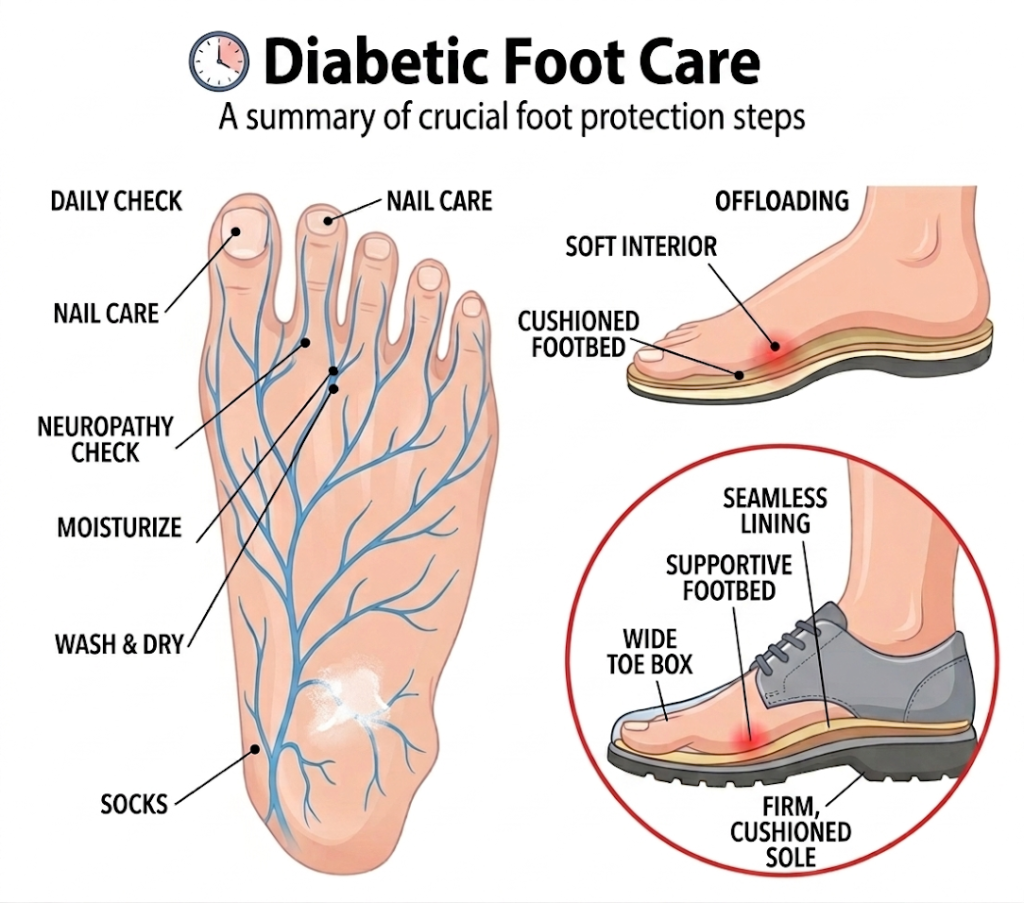
When you come to us for diabetic foot care, our focus is on thorough evaluation of every system that puts your feet at risk – neurological, vascular, structural, and dermatological.
Diagnosis: We perform monofilament testing and vibratory sensation assessment to evaluate neuropathy severity, pulse checks to assess arterial blood flow, and full skin and nail inspection to identify ulcer-prone areas before breakdown occurs. See: are your feet warning you? and understanding numbness and tingling in your feet.
The Preventive Approach: For patients without active wounds, we focus on safe nail care (including management of ingrown toenails), callus and corn debridement, diabetic footwear evaluation and custom orthotics, and personalized patient education on daily foot inspection. See our diabetic foot care tips blog and the importance of regular foot examinations for diabetic patients.

Urgent Care Note: A wound that is not healing, has increasing redness or warmth, shows pus or discharge, or is accompanied by swelling up the leg or fever is a medical emergency. Call us directly at (347) 442-5847 to arrange for immediate specialist consultation.
3. When to Consider Advanced Treatment: Wound Care and Surgical Intervention
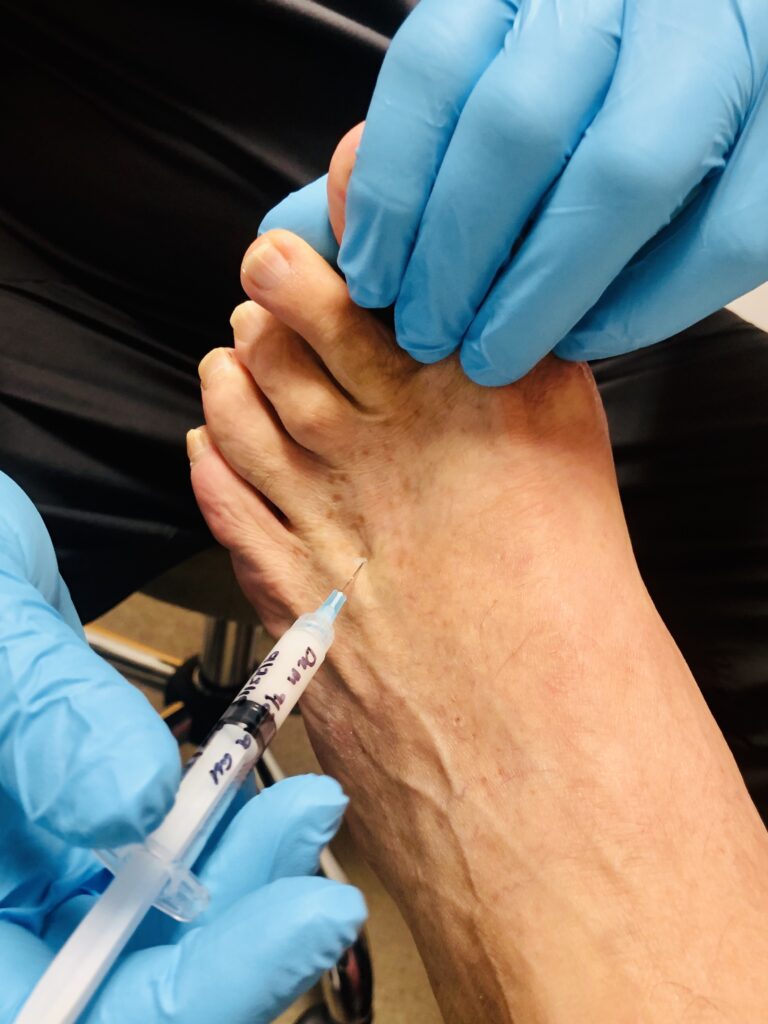
While prevention is our priority, advanced intervention is critical once a wound develops. We recommend immediate wound care consultation for any non-healing lesion, ulcer, or infected nail in a diabetic patient. The CDC’s foot care guidance for diabetics reinforces that early professional treatment is essential. See also: the importance of routine foot exams: preventing ulcers.
- Wound Debridement: Careful removal of dead and infected tissue to promote healing from the wound base
- Offloading & Pressure Relief: Total contact casting (TCC), custom orthotics, or therapeutic footwear to protect the wound site during healing
- Advanced Wound Dressings: Evidence-based dressings selected for wound type, depth, and moisture management
- Infection Management: Wound cultures, antibiotic coordination, and multi-disciplinary collaboration with your endocrinologist and infectious disease team
- Surgical Intervention: Abscess drainage, bone debridement for osteomyelitis, or reconstructive procedures when conservative wound care is insufficient
4. Your Journey to Protected, Healthy Feet
Effective diabetic foot care requires a true partnership between patient, podiatrist, and your broader care team. We actively coordinate with your endocrinologist, primary care provider, and vascular surgeon to ensure integrated, comprehensive management. Medicare Part B covers therapeutic footwear and certain podiatric services for eligible diabetic patients – visit Medicare.gov: Therapeutic Shoes or Inserts for coverage details. Your personalized care plan will be monitored closely by your North Island Podiatry physician, with care schedules adjusted based on your individual risk level.
Ready to Protect Your Feet from Diabetic Complications?
Don’t wait for a wound to develop. For expert, compassionate Diabetic Foot Care in NYC, choose the specialists focused solely on foot and ankle health.

FAQ
Questions About Foot & Ankle Care
At minimum, once a year for a comprehensive diabetic foot exam. If you have neuropathy, a history of ulcers, or poor circulation, quarterly or more frequent visits are strongly recommended. Regular podiatric checkups
are one of the most effective ways to prevent serious complications and protect your long-term mobility.
Rarely. Most diabetic foot ulcers require professional wound care to heal safely. Without treatment, the risk of infection and amputation increases significantly each week. If you notice any open wound or sore on your foot, contact our NYC team promptly — early intervention dramatically improves outcomes.
Medicare Part B covers therapeutic shoe fitting and certain podiatric services for eligible diabetic patients, including routine foot care when medically necessary. Coverage details vary by plan and condition, so our team will help verify your benefits before treatment. Call (347) 442-5847 and we’ll walk you through what’s covered.
Neuropathy caused by diabetes typically cannot be fully reversed, but its progression can be slowed and its symptoms managed with proper blood sugar control and regular podiatric care. Early detection is key—protecting the feet from injury before sensation is lost prevents the most serious complications.
Properly fitting, seamless diabetic shoes with extra depth and cushioned insoles are essential to prevent pressure points and ulcers. For at-risk patients, we prescribe therapeutic footwear and custom orthotics designed to redistribute pressure and protect vulnerable areas. The right footwear is one of the simplest, most effective ways to prevent diabetic foot complications.
Yes. The absence of pain is often the most dangerous sign of diabetic neuropathy — you can develop a serious wound without ever feeling it. Routine podiatric exams catch problems early, before they become limb-
threatening. If you have diabetes, regular foot care is essential even when everything feels fine.
Charcot foot is a severe neuropathic complication in which the bones of the foot weaken, fracture, and progressively collapse — often without the patient feeling pain. Urgent immobilization is critical to prevent
permanent deformity. If you have diabetic neuropathy and notice sudden swelling, warmth, or redness in one foot, seek evaluation immediately.
Seek immediate evaluation for any wound that hasn’t healed within two weeks, increasing redness or warmth, drainage, swelling extending up the leg, or fever accompanied by foot pain. For diabetic patients, these can signal a rapidly progressing infection. When in doubt, call us — early treatment can be the difference between a minor issue and a major one.
A diabetic foot ulcer is an open wound that develops on the foot — most commonly on the ball or bottom — due to neuropathy, poor circulation, or friction from footwear. Because reduced sensation can mask the
wound, ulcers often go unnoticed until they become serious. Prompt, specialized wound care is essential to prevent infection.
Surgery may be needed for severe ulcers that don’t heal, osteomyelitis (bone infection), Charcot reconstruction, or to correct deformities that create chronic pressure points. The goal is always limb preservation. Our NYC surgeons carefully weigh every option and pursue surgery only when it offers the best path to protecting your foot and mobility.
We Bring Smiles To You
Trusted foot and ankle specialists delivering care where convenience matters most.