

Tarsal Coalition Treatment in NYC
Suffering from a painful, rigid flatfoot? Our NYC specialists diagnose and treat Tarsal Coalition, a congenital condition, using advanced imaging and personalized surgical and non-surgical solutions.
Contact Us Today
Expert Diagnosis and Rigid Flatfoot Correction in NYC
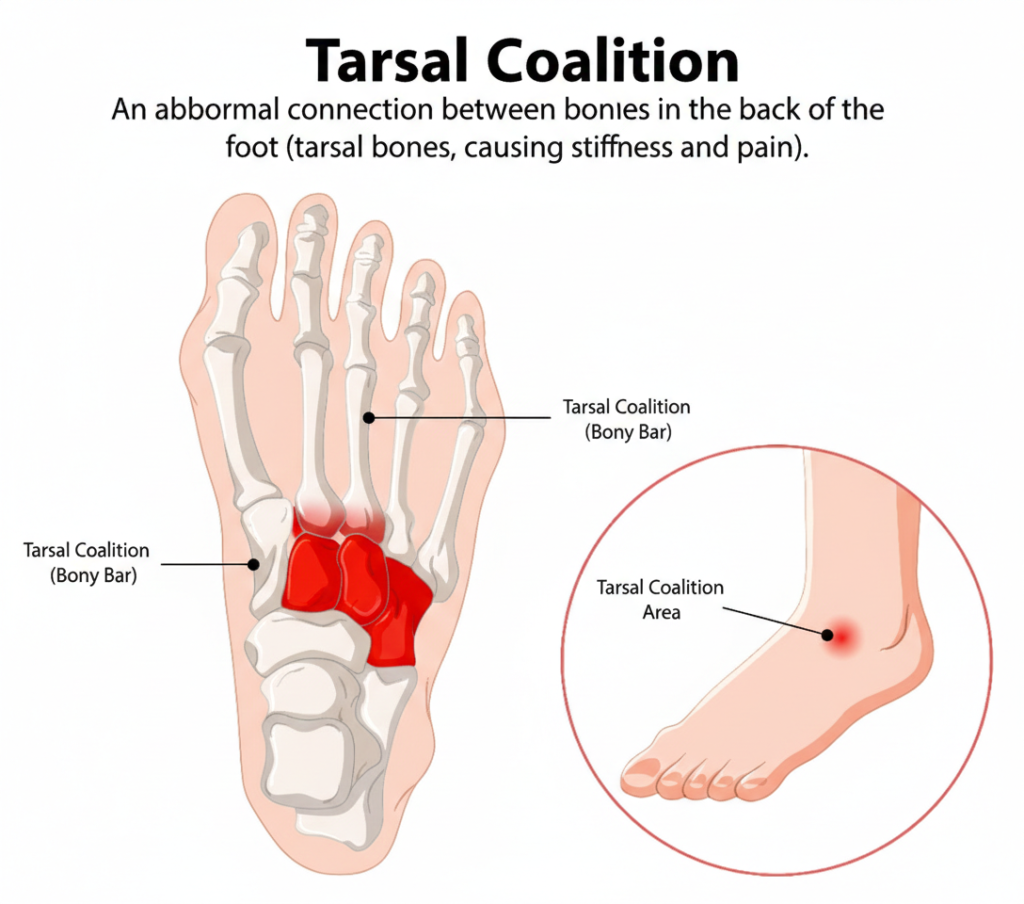
Tarsal Coalition is a congenital condition where two or more bones in the back of the foot (tarsals) are fused together by a bar of bone, cartilage, or fibrous tissue. This fusion prevents the natural motion required for a flexible foot, leading to a painful, rigid flatfoot. Often manifesting in childhood or adolescence, it can result in chronic ankle sprains, foot pain, and difficulty participating in sports.
Visit Us at One of Our Locations
Main Office:
Other Offices:
Because the condition is often missed or misdiagnosed as simple flat feet, it requires a highly specialized perspective. At North Island Podiatry Associates PC, our experienced, board-certified surgeons are experts in recognizing and treating this structural anomaly. To learn more about our commitment and specialized training, visit our About Us page. When you need true expertise for complex congenital foot conditions in New York City, you can trust our team.
1. Understanding the Injury: Why Coalition Causes Pain
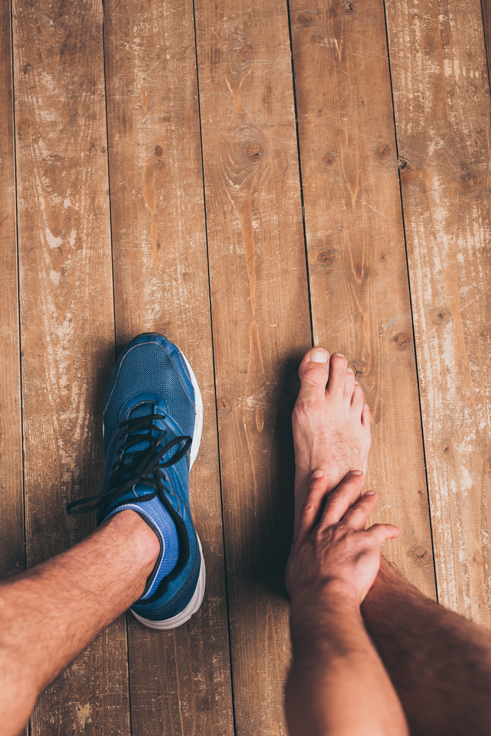
Tarsal Coalition disrupts the subtalar joint, the joint responsible for the foot’s ability to invert and evert (move side-to-side). When this movement is restricted by the fusion, the foot becomes rigid, forcing the rest of the body to compensate.
The structural rigidity and compensatory movements can lead to:
- Chronic, recurrent [ankle sprains] due to altered biomechanics.
- Persistent stiffness and muscle spasms (peroneal spastic flatfoot).
- Pain in the foot, ankle, or knee due to poor shock absorption.
- Accelerated [arthritis] in the surrounding joints due to abnormal loading.
If you suspect this congenital condition in yourself or your child, please prioritize immediate evaluation at one of our convenient New York locations.
2. Our Approach to Diagnosis and Staged Care
Diagnosing Tarsal Coalition requires specialized imaging beyond standard X-rays, as the fibrous or cartilaginous fusions are often invisible on a basic film.
Diagnosis: We rely on advanced imaging. A detailed CT scan is essential to map the exact location, type, and size of the coalition. An MRI may also be used to visualize soft-tissue bars that connect the bones.
The Conservative Approach: For mild cases, or during painful flares, treatment involves custom foot orthotics, casting/boot immobilization, and anti-inflammatory medication to calm the joint.

Urgent Care Note: If your child is experiencing persistent, unexplained foot rigidity and chronic pain, timely diagnosis is crucial for the best long-term outcome. Please call us directly at (347) 442-5847 to arrange for immediate specialist consultation.
3. The Surgical Solution: Resection or Arthrodesis
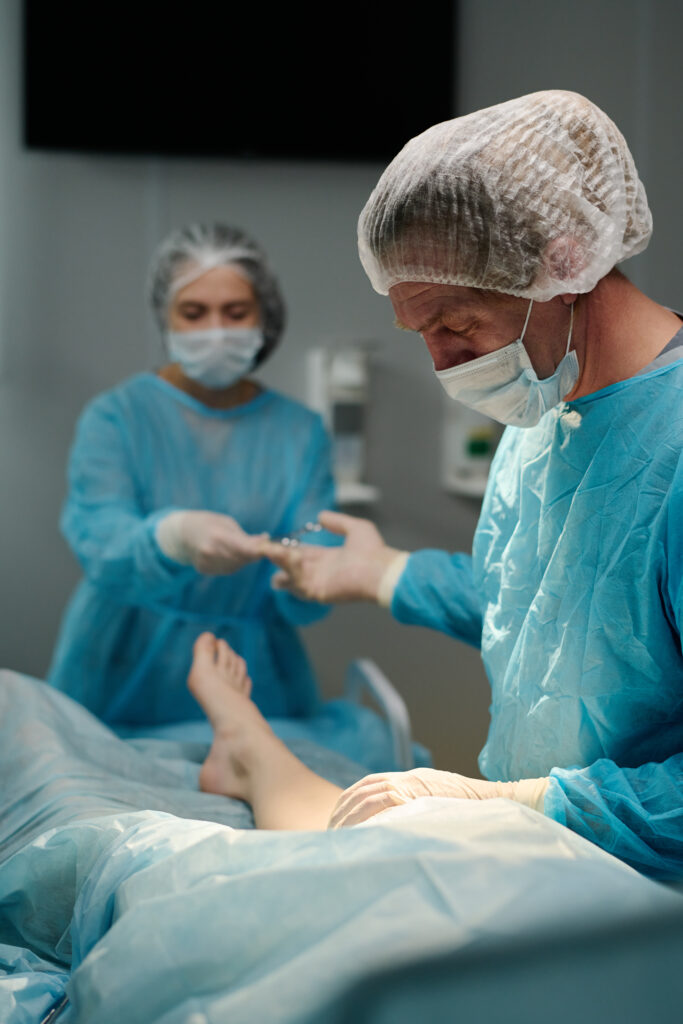
The definitive treatment depends entirely on the size of the coalition. For smaller coalitions, resection (removal of the bar) is performed. For large, arthritic, or complex fusions, arthrodesis (fusion of the involved joint) may be necessary.
Our NYC surgeons perform the procedure with meticulous care:
- Precision Resection: We carefully remove the bony bar and interpose fatty tissue or muscle to prevent re-fusion, aiming to restore joint motion.
- Corrective Arthrodesis: For complex cases, we permanently fuse the joint in an anatomically corrected position to eliminate painful motion and provide stability.
Our experience in complex reconstructive surgery means we are dedicated to restoring natural foot flexibility when possible or eliminating pain through stable fusion when necessary.
4. Your Journey Back to Movement
Post-operative recovery focuses on allowing the surgical area to heal and, in resection cases, encouraging new, healthy joint motion.
Your personalized rehabilitation will be monitored closely by your North Island Podiatry physician. We guide you through phases of non-weight-bearing (if surgical), physical therapy to improve range of motion, and eventual weight bearing to ensure you regain strength and function safely.
Ready to Begin Your Recovery?
Don’t settle for a life defined by foot rigidity and pain. For expert diagnosis and advanced Tarsal Coalition Treatment in NYC, choose the specialists focused solely on foot and ankle health.
FAQ
Questions About Foot & Ankle Care
It is an abnormal connection between two or more bones in the back of the foot, often present from birth.
This is when the bridge between the bones turns into solid bone (ossification), causing pain and stiffness.
Frequent ankle sprains, a “rigid” flat foot that doesn’t arch when standing on toes, and calf pain.
We use specialized X-ray views and often a CT or MRI to see the “bridge” between the bones.
Many cases respond to a period of immobilization in a boot followed by custom orthotics.
The surgeon either removes the abnormal bridge (resection) or fusions the joint if there is severe arthritis.
The goal is to reduce pain and increase mobility; the physical appearance of the arch may remain flat.
Not always, but it is common for a coalition to be present in both feet even if only one hurts.
Resection surgery usually allows weight-bearing in 2–4 weeks, while fusion takes 6–12 weeks.
Yes, if left untreated, the restricted motion can cause the surrounding joints to wear down prematurely.
We Bring Smiles To You
Trusted foot and ankle specialists delivering care where convenience matters most.